ip65 ip66 ip67 Ratings Meaning for Security Cameras
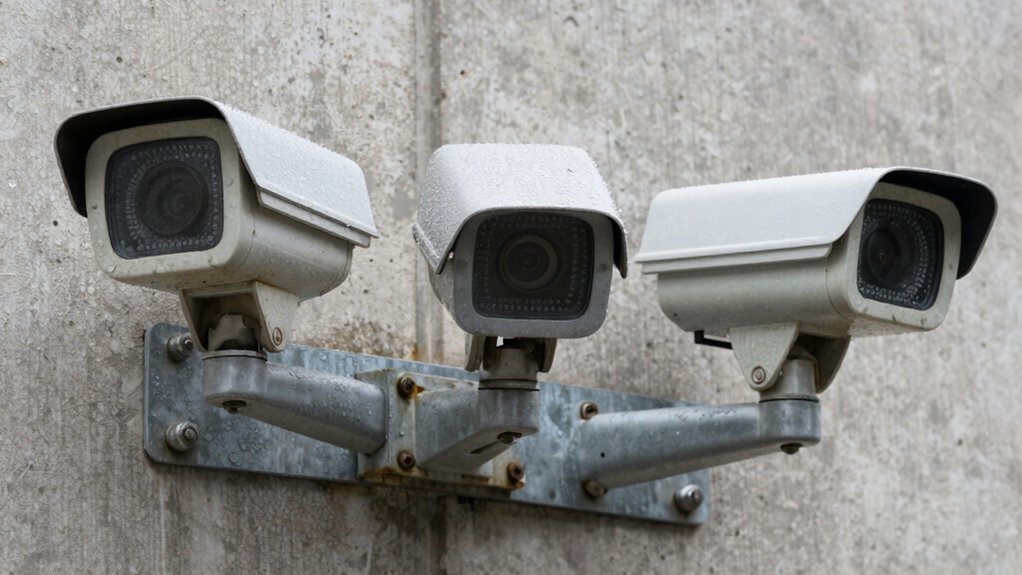
Pick the IP rating that matches your camera’s real exposure: IP65 blocks dust and withstands low-pressure water jets. IP66 adds resistance to high-pressure jets for exposed facades. IP67 adds temporary immersion protection (up to 1 m, 30 min) for flood-prone or ground-level mounts.
Ratings cover only ingress; they don’t guarantee UV, salt or impact resistance, so check material and seals on the spec sheet. Keep going and you’ll get practical selection and maintenance guidance.
ip65 ip66 ip67 Ratings Meaning for Security Cameras: Pick the IP rating that matches your camera’s real exposure: IP65 blocks dust and withstands low-pressure water jets. IP66 adds resistance to high-pressure jets for exposed facades. IP67 adds temporary immersion protection (up to 1 m, 30 min) for flood-prone or ground-level mounts.
Quick Answer: Which IP Rating Should You Choose?
Which IP rating should you pick for an outdoor camera? You’ll choose based on installation environment and performance specs. For sheltered spots with occasional dust exposure and minimal direct spray, IP65 delivers solid dust protection plus resistance to low-pressure water jets; it’s not submersible.
If the camera faces heavy rain, wind-driven spray, or needs higher corrosion resistance in coastal or industrial zones, upgrade to IP66 for high-pressure jet protection. Where standing water, temporary flooding, or potential submersion can occur, such as ground-level mounts or drainage-prone sites, pick IP67 to tolerate immersion up to 1 meter for 30 minutes.
Always validate the exact IP value on the spec sheet rather than marketing text to confirm real-world suitability. Match the rating to likely threats (dust, jets, immersion) and choose higher ingress protection where failure risks or maintenance costs would be unacceptable.
What an IP Rating Means for Cameras (Solids + Water)
How do IP ratings translate into real protection for your camera? The IP code uses two digits: the first indicates solids resistance (dust protection) and the second indicates liquids resistance (water protection). For cameras, that means you can read the rating as two measurable defenses—particle ingress and water exposure—rather than marketing language.
A camera rated IP65 is dust-tight and resists low-pressure water jets from any direction. It’s engineered for sheltered outdoor mounting but not immersion. IP66 keeps the same dust protection while withstanding high-pressure water jets. This rating is suitable for exposed locations with heavy rain or wind-driven spray.
IP67 maintains dust protection and adds temporary immersion resistance (typically up to 1 m for 30 minutes). This covers situations with standing water or brief submersion risk.
Use the two-digit values to match installation risks: evaluate particulate exposure, potential for water jets or spray, and immersion likelihood to select the appropriate IP level for reliable field performance.
IP65 : Protection From Dust and Water Jets
Wondering whether IP65 will keep your camera safe outdoors? IP65 blocks dust ingress to a degree that prevents operational failure but allows minimal dust accumulation over time; plan maintenance intervals accordingly.
The second digit 5 means protection against low-pressure water jets (6.3 mm nozzle) from any direction, not immersion. You can mount IP65 cameras in sheltered outdoor locations where rain and light spray occur; however, you shouldn’t expose them to submersion or high-pressure washing. Those increase corrosion risk and can force water seals to fail.
| Feature | What IP65 handles | What it doesn’t handle |
|---|---|---|
| Solids | Prevents harmful dust ingress | Fine particulate build-up over time |
| Water | Low-pressure jets, rain, light spray | High-pressure jets, immersion |
| Maintenance | Scheduled cleaning, seal inspection | No full waterproof testing |
Select IP65 when you need reliable dust and spray protection with routine maintenance. Choose higher ratings if immersion or powerful jets are possible.
IP66 : Surviving Powerful Jets and Heavy Rain
Need a camera that holds up in storms and driving rain? IP66 gives you dust protection plus resistance to powerful water jets from any direction. The rating specifies dust-tight enclosure and a larger nozzle (12.5 mm) water test than IP65; this produces higher flow and pressure to verify water durability under severe conditions.
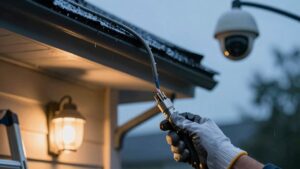
For deployment, choose IP66 when you need cameras exposed to heavy rain, wind-driven spray, or frequent blowing debris. The standardized test uses high-pressure jets delivering significantly more water than IP65. This confirms seals, cable glands, and housings resist ingress during storm events. You’ll get reliable optics and electronics protection without requiring immersion-rated designs.
Installation notes: mount connectors and seams to maintain the IP66 seal, inspect gaskets during service, and prefer housings designed for sustained jet exposure. In short, IP66 is specification-driven assurance that your outdoor camera will withstand powerful jets and heavy rainfall while maintaining full dust protection.
IP67 : Temporary Immersion and Real‑World Limits
If IP66 protects against powerful jets, IP67 steps up to resist brief submersion: it guarantees a dust-tight enclosure and survival when immersed to 1 meter for up to 30 minutes. You’ll rely on IP67 when a camera may encounter puddles, shallow floods, or accidental immersion. The standardized test immerses the device to 1 m for 30 minutes and checks for ingress.
In practical terms, IP67 tolerates those brief events but isn’t rated for continuous underwater operation. You should treat IP67 as a safety margin; not a permit for prolonged submersion near pools or marine installations where salt spray and extended exposure introduce corrosion and seal stress.
Don’t confuse IP67 with higher submersion classes. Avoid using an empty topic or starting an unrelated discussion about mount types or warranties here. Instead, focus on environmental risk: verify seals after impact, inspect gaskets periodically, and consider higher protection or additional housings where immersion risk exceeds the tested 1 m/30 min specification.
Which IP Rating Fits Common Installation Scenarios?
Which rating should you pick for a given installation? You’ll choose by matching environmental exposure to IP performance: dust resistance level is equivalent across IP65–IP67, but water ingress capability increases from jets to immersion.
Consider mounting considerations (orientation, overhangs, proximity to drains) when specifying the rating.
- Sheltered indoor or covered porch: IP65; adequate for dust resistance and occasional spray; lower-cost option.
- Exposed facades and open-air mounts: IP66; required where high-pressure rain or wind-driven spray occurs.
- Ground-level or flood-prone locations: IP67; needed where temporary submersion or standing water can occur.
- Temporary outdoor events or mobile mounts: IP66; handles hoses and heavy spray during setup and cleaning.
- Low-risk interior halls or server rooms: IP65; protects against dust and incidental cleaning sprays without immersion spec.
Select the lowest rating that safely exceeds expected exposure. Document mounting considerations to avoid under-specifying due to unusual water paths.
Beyond IP: UV, Salt, Mounting, and Maintenance Tips
Although IP ratings cover dust and water ingress, they don’t address other environmental threats you’ll face in real installations. You must specify and mitigate UV exposure, salt corrosion, mounting stresses, and maintenance access alongside IP selection. Select camera materials and finishes rated for UV resistance (polycarbonate or UV-stable coatings) to prevent housing embrittlement and optical yellowing. IP65/66/67 protects against dust protection and water; however, UV degrades unprotected polymers over years.
For coastal sites, specify marine-grade stainless steel or corrosion-resistant coatings and sacrificial anodes to resist salt-induced pitting that defeats seals. Design mountings to limit vibration and mechanical load. Use torque-specified bolts, sealed cable glands, and rated vibration isolators where wind or traffic induces stress.
Finally, define maintenance routines: inspection intervals, seal condition checks, lens cleaning, and verification of the IP rating on the spec sheet. Document procedures and replacement thresholds so field teams can maintain long-term performance without relying solely on IP numbers.
Frequently Asked Questions
Do IP Ratings Cover Protection Against Vandalism or Impact?
No, IP ratings don’t cover vandal resistance or impact protection. You should treat IP as a dust/water ingress specification only.
For vandal resistance and impact protection, look for IK ratings or specific vandal-resistant housings and tamper-resistant features. Specify required IK level (e.g., IK08–IK10) alongside the IP rating when selecting cameras. That ensures both environmental sealing and mechanical resistance are defined in procurement and installation specifications.
How Do IP Ratings Affect Camera Warranty or Certifications?
IP ratings influence warranty implications directly: manufacturers specify environmental limits and you’ll void coverage if you exceed them. You’ll need two word discussion ideas like “sealed integrity” and “ingress thresholds” when reviewing specs.
You’ll confirm certifications listed on the datasheet, document installation conditions, and follow maintenance schedules to preserve warranty. Technical evidence (test reports, IP certificate copies) supports claims during service requests and clarifies scope of coverage and exclusions.
Are Connectors and Cables Included in the Camera’s IP Rating?
No, connectors and cables aren’t automatically covered by the camera’s IP rating. You’ll need to verify connector compatibility and cable availability separately.
You should specify sealed or glanded connectors and use IP-rated junctions, molded assemblies, or waterproof cable glands to maintain enclosure integrity. Check manufacturer specs for tested connector types, mating interfaces, and cable jacket materials. Confirm installation methods and accessory certifications to ensure the system achieves the intended environmental protection.
Can Ip-Rated Cameras Operate in Extreme Hot or Cold Temperatures?
Yes, some IP-rated cameras can operate in extreme temperatures. However, you’ll need to check their specified operating temperature range and additional ruggedization. You’ll verify specs for extreme temperatures, thermal management, and enclosure materials. Look for built-in heaters, fans, or conformal coating.
Note that the IP rating covers ingress; it does not indicate physical vandalism resistance. For impact protection, check the IK rating and housing specs to ensure reliable operation in harsh climates and abuse.
Do Ip65/66/67 Ratings Guarantee Long-Term Corrosion Resistance?
No, IP65/66/67 ratings don’t guarantee long-term corrosion resistance. You get specified protection against moisture and solid ingress, and that supports durability under weather. However, IP tests don’t assess material corrosion or chemical resistance.
You should verify enclosure materials (stainless steel, anodized aluminum, marine coatings), finish quality, and any corrosion-specific standards (ASTM, ISO). For reliable long-term performance, choose corrosion-rated treatments and follow maintenance recommendations.
Conclusion
Choose the IP rating that matches the environment and risk profile: IP65 for dusty areas with occasional water exposure, IP66 for consistent heavy rain and strong jets, and IP67 if temporary immersion is possible.
Remember, IP ratings specify laboratory-tested ingress resistance (solids then liquids) but do not cover UV, salt corrosion, mounting integrity, or maintenance needs. Specify required rating in procurement; plan corrosion-resistant fittings and regular seals inspection; and validate installation with on-site checks and lifecycle maintenance.
Related: Solar Panels