Video Doorbell Transformer Voltage Compatibility Chart
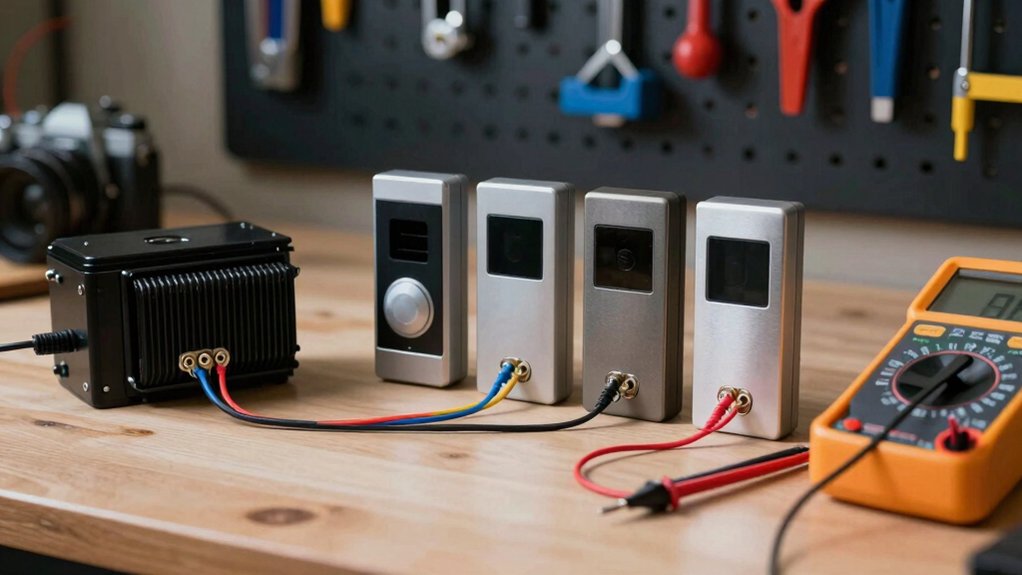
You’ll need a transformer that supplies 16–24 VAC at a suitable VA to run most video doorbells. Aim for 10–40 VA for basic installs; aim for 20–40 VA for multiple chimes or long cable runs. Measure output under load with a multimeter and shut power at the breaker first. If your transformer only shows 8–12 VAC or under ~10 VA, upgrade it.
Keep the voltage and VA within the doorbell’s spec. Continue for model‑by‑model compatibility details.
Video Doorbell Transformer Voltage Compatibility Chart: You’ll need a transformer that supplies 16–24 VAC at a suitable VA to run most video doorbells. Aim for 10–40 VA for basic installs; aim for 20–40 VA for multiple chimes or long cable runs. Measure output under load with a multimeter and shut power at the breaker first.
Video Doorbell Compatibility : Quick Verdict & Chart
Wondering which transformer will work with your Ring doorbell? You’ll match transformer output to the model’s acceptable AC range: ensure voltage falls inside the specified window to prevent damage and guarantee operation. For most installs, compatible transformers deliver 16–24 VAC at 10–40 VA. Some models accept 8–24 VAC; however, 8V output only suits those specific units.
When evaluating different installation scenarios, measure the transformer with a multimeter under load to confirm actual VAC and available VA. In regions with integrated mains-chime transformers (UK/Europe), verify compatibility carefully. The presence of a transformer doesn’t guarantee correct voltage or VA for higher-resolution devices.
For power optimization, prioritize a transformer that provides stable 16–24 VAC and adequate VA for your Ring model’s needs. Avoid undersized VA, as this can cause performance issues. Use the quick chart approach: model → required VAC range → minimum VA. Then confirm with measurement before final installation.
Required Voltage & VA By Doorbell Model
Which transformer should you pick for each Ring model? Match voltage and VA to the model’s specified range to ensure reliable operation and transformer safety. For Ring Video Doorbell Wired, choose 8–24 VAC, 50/60 Hz, rated 8–40 VA.
For Ring Video Doorbell Pro and Ring Pro 2, pick 16–24 VAC, 50/60 Hz, rated 10–40 VA. For Ring Wired Video Doorbell Plus (2nd Gen), use 16–24 VAC, 50/60 Hz, rated 10–40 VA. For Ring battery-powered doorbells, the transformer may supply 8–24 VAC, 50/60 Hz, rated 5–40 VA; however, those models can also run on battery alone.
When you select a transformer, verify both voltage and VA fall within the device’s range. Underpowered units can malfunction, and overvoltage can damage the device. During installation, follow proper doorbell wiring practices and the transformer safety guidelines in the device manual. If you’re unsure, consult a qualified electrician to confirm compatibility and safe wiring.
Where to Find Your Doorbell Transformer
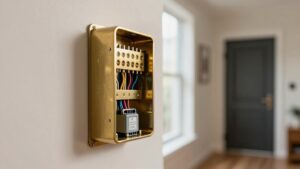
Now that you know the voltage and VA ranges to match to each Ring model, locate the transformer so you can verify its specs and confirm compatibility. Begin by tracing the doorbell wiring from the chime. Many systems have an external transformer mounted near the main electrical panel, basement, garage, attic, or furnace area. Some chimes, however, contain an integrated transformer; check the chime for low-voltage labeling before searching elsewhere.
If the transformer isn’t in the chime, follow the wiring run. You’ll often find the device mounted on a junction box or rail near the panel.
- Check near the main electrical panel and breaker box.
- Inspect basements, garages, attics, and furnace rooms.
- Look along the doorbell cable run for separately mounted units.
- Verify the chime housing for integrated-transformer labeling.
- Use visual clues: small boxed unit with two low-voltage terminals.
This focused approach to finding transformers and common mounting locations saves time and avoids unnecessary disassembly.
Read Your Transformer’s Rating (Visual Guide)
How do you quickly tell whether a transformer will work with your smart doorbell? Inspect the label or casing for three clear specs: voltage (V), frequency (Hz), and VA (or power) rating. You want 16–24V AC at 50/60 Hz; anything marked 10V is typically incompatible with Ring/2K/1080p devices.
Confirm the VA rating matches your doorbell and chime needs. Common acceptable ranges are 10–40 VA, with 20VA or 30VA often recommended. For multi-chime setups, look for tri-voltage markings and an explicit note about supporting multiple chimes. If that detail’s missing, treat it as an unknown.
Ignore any irrelevant discussion printed on the housing, like manufacturing codes or unrelated topic web addresses; they don’t affect electrical compatibility. If the label shows the proper 16–24V AC and adequate VA, the transformer meets common wired smart doorbell requirements. If labels are worn or absent, don’t assume compatibility.
Measure Transformer Output Safely With a Multimeter
Want to confirm your transformer’s output before installing a smart doorbell? Start by turning off power at the breaker. Then access the transformer wiring with the primary side de-energized. Use a multimeter set to AC voltage and place one probe on each secondary terminal to read the output.
- Cut power at the breaker before touching wiring.
- Keep the primary side de-energized; only test the secondary.
- Set the multimeter to AC volts and probe both secondary terminals.
Expect ~16–24V AC for common smart doorbells; ~10V is inadequate. If reading falls outside 16–24V, plan an upgrade; do not consider a workaround.
This is about verification, not an irrelevant topic or unrelated idea. A measured 16–24V indicates compatibility. However, 10V or other out-of-range values mean the transformer won’t reliably power most 16–24V devices.
Follow safety steps strictly to avoid shock or equipment damage.
Compatibility Chart: Transformer → Doorbell Models
Because transformer voltage and VA ratings directly determine whether a Ring doorbell will run reliably, use a concise compatibility chart to match your transformer’s output to specific Ring models. You’ll check two parameters: voltage (VAC) and Doorbell VA settings.
For 8–24 VAC and 8–40 VA, the Ring Video Doorbell Wired is compatible; this range also supports battery models for power delivery; however, they mainly use battery power. For 16–24 VAC and 10–40 VA, Ring Video Doorbell Pro, Ring Wired Video Doorbell Pro, and Ring Wired Video Doorbell Plus (2nd Gen) are compatible.
Any transformer rated below 8 VAC or above 24 VAC falls outside recommended Transformer compatibility and risks unreliable operation or damage. If your transformer’s VA rating is below a model’s minimum, the doorbell may brown out. If it’s within the stated VA ranges, it’ll supply sufficient current.
Use the chart to match your transformer’s VAC and VA to the specific Ring model before installing.
Common Incompatible Transformer & Chime Setups
Ever checked your existing chime and found the Ring doorbell won’t power up? You’ll often trace the issue to transformer placement or chime compatibility rather than the doorbell itself. If the chime houses a mains-only unit with no low-voltage transformer, the doorbell won’t get the 16–24 VAC it needs.
In Europe, many high-voltage setups or integrated-transformer chimes (certain Deta models) are common culprits. Transformers outputting 8–10 V are also incompatible with most Ring wired units. Some transformers are rated for one short-run chime only; tri-voltage variants can support a second chime but still must meet VAC range.
- Integrated mains chime (no low-voltage transformer) prevents direct Ring power.
- High-voltage European systems require relocating the transformer or adding one.
- 8V–10V transformer outputs are below Ring’s 16–24 VAC requirement.
- Single-chime-rated transformers may fail with multiple doorbells.
- Deta-style integrated transformers often lack chime compatibility.
When & How to Upgrade Your Doorbell Transformer (Voltage & VA)
When should you upgrade your doorbell transformer? If your transformer outputs 8–12 VAC or supplies under 10 VA, you should upgrade to 16–24 VAC and at least 10 VA to support modern smart doorbells (Ring Pro/2K, wired Ring).
Verify your doorbell’s required range first: Pro models require 16–24 VAC; some wired versions accept 8–24 VAC.
How to choose: pick 16–24 VAC and 10–40 VA depending on load. For a single chime, a T1610 (16 VAC, 10 VA) or DH910 at 16 VAC/10 VA is sufficient. For multiple chimes or long runs, choose higher VA (20–40 VA) or DH910 variants that offer 24 VAC and 20 VA to offset voltage drop.
Installation: confirm compatibility, shut power at the breaker, and follow code-compliant wiring or hire a licensed electrician.
For planning, you might jot two word discussion ideas. However, do not conflate this with unrelated topics such as vacation planning or kitchen remodeling; those belong elsewhere.
Frequently Asked Questions
Will a Transformer Affect My Existing Doorbell Chime’s Sound Quality?
Yes, a transformer can affect your doorbell chime’s sound quality. If the transformer age is advanced or it’s undersized, voltage drops and waveform distortion can make the chime sound weak, warped, or intermittent.
Newer, properly rated transformers deliver stable voltage and preserve clear, consistent tone. You should measure voltage under load; if readings fall outside the chime’s spec, replace the transformer to restore optimal sound quality.
Can I Power Multiple Doorbells With One Transformer Safely?
Yes, you can power multiple doorbells with one transformer if the transformer’s VA rating exceeds the combined draw. You should calculate total current by adding each doorbell’s standby and activation VA. Then, choose a transformer with margin. Use two word idea1 and two word idea2 as load-check reminders.
If you’re unsure, consult a licensed electrician; undersizing causes chime distortion, intermittent operation, or overheating.
Do Weatherproof Transformers Require Special Installation Locations?
Yes, weatherproof transformers need careful placement and weatherproof installation. You’ll mount them where moisture, direct sun, and pooling won’t occur; this requires using rated enclosures and corrosion‑resistant hardware.
Transformer placement should allow ventilation, secure mounting, and accessible servicing while keeping wiring runs short and protected by conduit. Follow local codes, manufacturer instructions, and GFCI/grounding requirements. Proper placement and installation minimize failure risk and maintain safe, reliable operation.
How Do Surge Protectors Impact Video Doorbell Performance?
Surge protectors improve video doorbell performance by reducing voltage spikes and preserving power stability. You’ll see fewer resets and less component stress. You’ll get more reliable recordings and network connections because the doorbell won’t suffer transient-induced brownouts.
Use a properly rated surge protection device and follow manufacturer guidelines; otherwise, you could introduce grounding issues or clip needed inrush current. Overall, surge protection enhances longevity and consistent operation.
Can a Transformer’s Age Cause Intermittent Video Doorbell Failures?
Yes, transformer aging can cause intermittent power and lead to intermittent video doorbell failures. As a transformer degrades, insulation, windings, or connections can create voltage drops, thermal instability, or shorts that sporadically interrupt supply.
You should measure open-circuit and loaded voltage. Inspect for overheating or corrosion, and replace an old transformer if you see voltage fluctuation, excessive heat, or audible humming to restore reliable doorbell operation.
Conclusion
You’ve now got the key facts to match a transformer to your video doorbell: Required voltage and VA vary by model, so check the label, measure output with a multimeter, and consult the compatibility chart before installation.
If your transformer can’t supply the doorbell’s rated voltage and VA, upgrade to a properly sized unit or use the manufacturer’s adapter. Doing this prevents malfunction, false alerts, and chime issues while ensuring reliable performance and safe operation.
Related reading: Doorbell Chime Compatibility — a closer look at this topic.