Outdoor Security Camera Weatherproofing Features to Consider
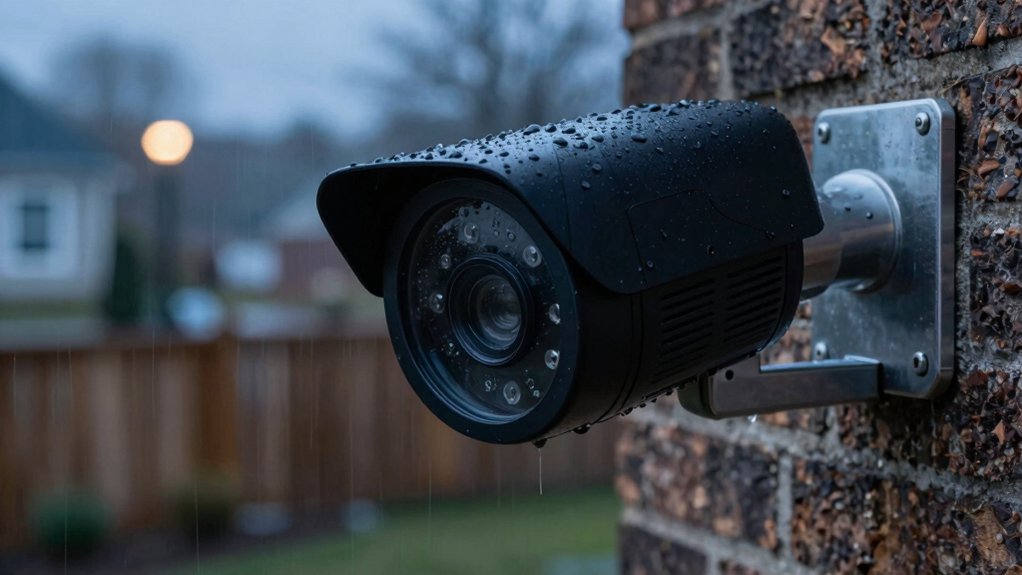
You should pick cameras rated at least IP65; preferably IP66 or IP67. Pair that with an IK impact rating (IK10 ideal) so they resist dust, heavy rain, pressure-washing, and vandalism. Look for aluminum or UV‑stable polycarbonate bodies, reliable gaskets and cable glands, corrosion‑resistant connectors, and internal heaters or cooling for extreme temps.
Choose form factor and mounts that reduce exposure. Plan routine seal and thermal checks, with alerts for moisture or thermal faults to keep uptime high. More details follow.
Outdoor Security Camera Weatherproofing Features to Consider: You should pick cameras rated at least IP65 ; preferably IP66 or IP67. Pair that with an IK impact rating (IK10 ideal) so they resist dust, heavy rain, pressure-washing, and vandalism. Look for aluminum or UV‑stable polycarbonate bodies , reliable gaskets and cable glands, corrosion‑resistant connectors, and internal heaters or cooling for extreme temps.
Quick Overview
- Choose an IP rating: minimum IP65; IP66+ for security sites; and IP67/68 if immersion risk exists.
- Pair IP rating with an IK impact rating (e.g., IK10) to resist vandalism and mechanical forces.
- Verify materials and seals: corrosion-resistant body; UV-stable plastics; plus replaceable gaskets and O-rings.
- Ensure thermal features: wide operating range; internal heaters; and cooling or de-icing for extreme climates.
- Plan maintenance and monitoring: quarterly seal inspections; post-storm checks; and moisture/thermal fault alerts.
Quick Answer: What IP Rating Do Outdoor Cameras Need?
Wondering what IP rating your outdoor camera needs? You should aim for at least IP65 for basic outdoor protection. However, in security-focused installs, you’ll usually pick IP66 or higher to resist heavy rain and power washing.
IP67 durability matters when sites face temporary immersion or severe flooding. Choose IP68 only if prolonged submersion is possible. The first digit tells you solid protection: watch for ratings that prevent dust ingress in dusty, windy, or sandy locations.
Match the rating to local hazards: dust, wind-blown grit, hail, and routine washdowns. For most professional deployments, IP66 is the baseline. Upgrade to IP67 when immersion risk exists or when equipment sits low to the ground.
Don’t rely solely on the printed rating; verify seals, cable glands, and operating temperature ranges. Consider additional housings in extreme conditions. That approach keeps your camera online and secure under realistic environmental stress.
IP Ratings & IK Impact on Weatherproof Cameras
You’ve already matched IP ratings to basic outdoor threats. Now compare those ingress ratings with IK impact scores to get the full picture of physical resilience.
When you evaluate an IP rating, read the two digits: solids protection (0–6) and liquids (0–9K). For general outdoor deployments, you’ll want at least IP66. Choose IP67 or IP68 if temporary or prolonged immersion is plausible. Higher second-digit values matter when heavy rain, pressure-washing, or submersion are realistic risks.
Pair ingress resistance with IK impact assessment to guard against tampering, vandalism, and hail. IK ratings (IK10 is common) indicate how much mechanical force housing will absorb before failing. Don’t assume a high IP rating guarantees impact toughness; both metrics are independent.
Select devices with IP66+ or IP67/68 plus a suitable IK score based on site threats, exposure, and maintenance access. That dual approach gives you actionable clarity on long-term physical durability.
Material, Seals, and Corrosion Resistance for Outdoor Cameras
How will the housing materials, seals, and corrosion protection you choose affect a camera’s long-term reliability? You need focused material selection: aluminum alloys and UV-resistant polycarbonate resist impact, UV, and offer corrosion resistance in salt or polluted environments. Sealed housings use gaskets and O-rings at seams and access points to keep water and dust out. Inspect and replace them periodically. Use sealed cable entries and weatherproof glands to preserve enclosure integrity and prevent moisture wicking.
Add visors or lens sheaths to protect optics from rain, snow, and wind-driven debris; this preserves image clarity. Choose mounting hardware rated for weather-stress resistance so winds and movement won’t compromise seals.
| Feeling | Choice | Benefit |
|---|---|---|
| Confidence | Aluminum body | Long-term corrosion resistance |
| Relief | Gaskets & glands | Maintained seal integrity |
| Assurance | Lens visor | Clear images in storms |
Prioritize components that sustain seals and resist corrosion. That’s how you keep cameras reliable.
Temperature Tolerance and Thermal Management
Why does temperature tolerance matter for outdoor cameras? You rely on consistent operation. Professional models rated from -30°C to +60°C (-22°F to 140°F) keep sensors, electronics, and recordings reliable across climates. Temperature tolerance impacts battery life in wire-free units and dictates whether thermal management features are required to prevent failures.
You should prioritize cameras with validated climate performance and built-in thermal management: internal heaters for freezing conditions and cooling or ventilation for heat. These features prevent condensation, sensor damage, and image degradation. After extreme events, inspect seals and grommets to maintain insulation integrity and long-term reliability.
- Rated operating range (e.g., -30°C to +60°C) ensures deployment in diverse climates
- Battery degradation in cold/hot conditions affects uptime and requires design adjustments
- Internal heaters prevent condensation and frozen mechanics in low temperatures
- Cooling or ventilation avoids overheating during heat waves and preserves image quality
- Routine checks of seals/grommets confirm thermal barriers remain effective
Weatherproof Camera Form Factors: Dome, Bullet, PTZ, 360
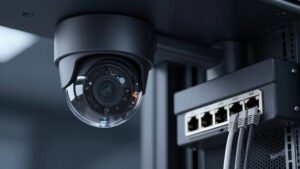
Which form factor fits your site and climate? You’ll pick based on exposure, deterrence, and maintenance. Dome vs bullet is a key trade-off: domes shed water, resist ice buildup, and IK10-rated domes handle hail and debris. Bullets are visible deterrents for large areas but sit more exposed to weather.
PTZ units give flexible coverage; however, they have moving parts that can ice without robust housings and heaters. 360 degree considerations matter if you mount flat under eaves. These units avoid direct rain but need humidity control and often perform best under overhangs. For extreme sites, choose housings with built-in heaters/cooling and sealed gaskets to maintain uptime.
| Emotion | Form factor impact |
|---|---|
| Confidence | Dome: protective, low-maintenance |
| Deterrence | Bullet: highly visible, assertive |
| Coverage | PTZ: dynamic, needs robust seals |
| Assurance | 360°: broad view, needs sheltering |
Power & Connectivity Options: PoE, Solar, LTE for Harsh Sites
Wondering which power and connectivity mix will keep your outdoor cameras running through storms, snow, and long outages? You’ll prioritize Power options and Connectivity options based on site criticality. For mission‑critical or high‑interference sites, choose PoE: a single ruggedized cable carries power and data for stable, low‑latency wired links. Use Wi‑Fi only where flexibility outweighs weather risk.
For remote, trenchless sites, deploy solar with LTE/5G backhaul to avoid cabling and enable rapid setup. Design off‑grid systems with extended batteries and power management to target 400+ days of uptime in ideal conditions. Implement hybrid architectures: local edge storage (SD or HDD) plus cloud or hybrid backhaul to balance privacy, redundancy, and maintenance. Test failover behavior and monitor power telemetry remotely so you can act before outages affect recording.
- PoE for wired reliability and simplified installs
- Wi‑Fi for flexible placement but less resilience
- Solar + LTE/5G for remote, cabling‑free sites
- Extended batteries and power management
- Local storage with cloud/hybrid backhaul
Weather‑Proof Installation: Mounts, Cable Glands, and Overhangs
Want a camera that stays online through rain, wind, and freeze-thaw cycles? Position it under an overhang or eave to cut direct rain while keeping the field of view clear. Choose weatherproof mounts rated for local wind loads and corrosion: stainless or powder-coated alloys prevent loosening and lens misalignment. Use enclosures with appropriate IP ratings (IP66/IP67) at the point of installation so dust and water cannot compromise electronics.
Route cables through certified cable glands that seal against moisture and allow strain relief. Improper routing or loose glands is where water usually enters. Ensure housings include drainage paths so incidental water can escape without pooling. Anchor mounts to solid substrate with correct fasteners and verify torque specs for freeze-thaw cycles that can work screws loose.
Together, sealed housings, robust weatherproof mounts, correctly installed cable glands, and strategic overhang placement give you predictable, long-term weather resistance and sustained security coverage.
Maintenance Checklist and Monitoring to Prevent Weather Failures
How do you keep weatherproofing from failing when you least expect it? You follow a tight maintenance schedule and active fault monitoring so small issues don’t become surveillance gaps. Inspect IP-rated housings (IP65+; IP66/67 when needed), seals, and mounts quarterly and after storms. Check gaskets, O-rings, and weatherproof glands for cracks. Verify cable conduits and corrosion-free connectors. Test internal heaters, defogging, and de-icing systems before seasonal extremes. Record findings and corrective actions in logs tied to alerts.
- Monthly visual inspection: housing, lens, mounts, and overhang integrity.
- Seasonal functional test: heaters, defog, smart IR, and image clarity.
- Immediate post-storm check: seals, water ingress, and cable strain.
- Fault monitoring setup: network alerts, moisture sensors, and thermal anomalies.
- Replacement cadence: gaskets, UV-exposed plastics, and stressed mounts.
You’ll reduce downtime, extend component life, and keep continuous, year-round surveillance by combining disciplined upkeep with automated fault monitoring.
Frequently Asked Questions
Can I Install a Weatherproof Camera in Coastal Salt-Spray Environments?
Yes, you can install a weatherproof camera in coastal salt-spray environments if you choose models designed for that exposure. You should pick cameras with corrosion-resistant housings, IP66/67 ratings, and UV resistance coatings to withstand sun and salt.
Regular maintenance, sacrificial anodes, and stainless-steel mounts prolong life. Inspect seals, connectors, and lenses periodically. Consider enclosures with desiccants or anti-fog features to maintain clear, reliable surveillance.
How Do Warranties Handle Weather-Related Damage to Cameras?
Warranties usually cover manufacturing defects and failures within a set period; however, they’ll often exclude weather-related damage like corrosion, flood, or salt-spray unless you bought specific warranty coverage for harsh environments.
You should read the warranty coverage terms, document installation conditions, and keep maintenance records. If damage exclusions apply, the manufacturer may deny claims.
Consider extended or commercial-grade plans that explicitly cover environmental exposure to avoid surprises.
Are Consumer Cameras Safe to Leave Unattended During Heavy Snowfall?
Yes, you can leave consumer cameras unattended during heavy snowfall, but do not assume they will perform flawlessly. Check the IP rating and ensure seals and mounts are intact. Snow buildup can obscure lenses and short batteries. Cold reduces battery performance significantly; therefore, use cold-rated batteries, keep spares indoors, or install wired power.
Position cameras under eaves and angle lenses to shed snow. Schedule regular checks to maintain reliable surveillance.
Can Coatings or Treatments Be Applied to Improve UV Resistance?
Yes, you can apply UV coatings and anti fog treatments to improve UV resistance and lens clarity. You’ll want UV coatings on housings and polycarbonate domes to reduce yellowing and brittleness. Use anti fog treatments on lenses and inside domes to prevent condensation.
Pick marine- or outdoor-rated products; follow manufacturer cure times, and test on a small area to assure coatings don’t impair autofocus, IR transparency, or image quality.
Do Weatherproof Cameras Require Lightning/Surge Protection?
Yes, you should use surge protection and consider lightning protection for weatherproof cameras. You’ll prevent damage from voltage spikes on power and data lines. This will keep recordings and hardware intact; it will also reduce downtime.
Install inline surge suppressors, use grounded power supplies, and add lightning arrestors or isolation devices where lightning risk is high. You’ll also follow local grounding codes and test protection periodically to ensure continued effectiveness.
Conclusion
You’ll want cameras rated and installed to survive whatever your site throws at them. Choose IP/IK ratings that match exposure, corrosion‑resistant materials, and seals rated for your temperature range.
Pick the right form factor and power/connectivity (PoE, solar, LTE) for reliability. Use proper mounts, cable glands, and overhangs. Schedule inspections and firmware monitoring to catch seal or sensor failures early. That focused approach keeps your perimeter secure and reduces weather‑related downtime.
Related reading: ip65 ip66 ip67 Ratings Meaning — a closer look at this topic.